
Pakistan has once again blamed India for playing a blame game over their bilateral disputes, including Jammu and Kashmir.
Pakistan on Tuesday expressed disappointment over India's reaction to the Lahore high court quashing cases registered under the anti-terror law against 26/11 mastermind and Lashkar-e-Tayiba founder Hafiz Saeed, saying that questioning decisions made by the country's independent judiciary was "not a wise step".
Pakistan on Friday said it is going to the upcoming foreign-secretary level parleys with India with an 'open mind' and was hopeful of a 'constructive attitude' from it so that the stalled peace process can be resumed. Referring to the upcoming meeting between the foreign secretaries of Pakistan and India on the margins of the SAARC Council of Ministers meeting in Bhutan, Foreign Office spokesman Abdul Basit said, "Pakistan is going to Thimphu with an open mind".
Upping the ante, Pakistan on Thursday said there can be no result-oriented discussions with India on Kashmir unless New Delhi stops treating it as the country's integral part and seeking a solution within the ambit of the Indian Constitution.
Pakistan on Thursday said it is fully capable of safeguarding its security in the face of induction of new technology and weapon system by India, including an Israeli-made spy satellite launched earlier this week.
According to Basit, the meetings are following up on the groundwork laid by the foreign secretaries of Pakistan and India during their meeting in Islamabad last year.
While India has indicated that it may restart the foreign secretary level talks with Pakistan, Islamabad maintains that it would accept nothing short of resumption of comprehensive 'composite dialogue' with New Delhi.
Pakistan on Thursday said no meeting has been fixed as yet between the foreign ministers of India and Pakistan to take forward the bilateral process. Foreign office spokesman Abdul Basit said no meeting between the foreign ministers had been fixed, in the wake of the decision by Prime Minister Yousuf Raza Gilani and his Indian counterpart Manmohan Singh to revive the peace process between the two countries.

Pakistan higher commissioner to India Abdul Basit on Thursday said there is no disconnect between Pakistan government and its army, and urged people to listen to Prime Minister Nawaz Sharif who is desirous of improving and bettering India-Pakistan ties.

Pakistan government is holding internal discussions on formulating a policy to deal with the new Indian government under Narendra Modi.

Congress on Thursday raised the Pathankot terror attack issue in the Lok Sabha and advised the Narendra Modi government to negotiate with Pakistan from a position of "strength" and not "emotions".

Jammu and Kashmir unit of Vishwa Hindu Parishad termed the invite by Pakistan High Commissioner Abdul Basit to Kashmiri separatists as "strange and ironical," saying the neighbouring country is playing with the sovereignty of India.
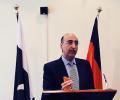
India on Sunday summoned Pakistan High Commissioner Abdul Basit and lodged a strong protest over ceasefire violations by Pakistani troops along the LoC in Jammu and Kashmir.
Pakistan today said it has not received a formal request from India or Interpol to hand over 22 suspects in the Mumbai terror attacks even as it insisted it will take action against its nationals on its own soil.
Describing India's massive militarisation as dangerous for peace in the region, Pakistan has said that its military doctrine was purely defensive.
Dismissing as "untenable" India linking resumption of talks with action against the Mumbai attack perpetrators, Pakistan said on Thursday, that a "true dialogue" does not come with pre-conditions. It also claimed it had evidence of India's involvement in fomenting trouble in south-western Balochistan province.
Pakistan on Thursday said it was "disturbed" by reports that India could be preparing for additional nuclear tests and hoped a unilateral moratorium on testing would remain in place in the region.
Pakistan has welcomed United States Secretary of State Hillary Clinton's remarks that New Delhi and Islamabad should settle the Kashmir problem bilaterally, and said it looked forward to resumption of the composite dialogue between the two countries to discuss the issue. "The two countries have agreed to discuss this issue bilaterally by agreeing to the composite dialogue framework. And Kashmir dispute is a part of that framework," said Foreign Office spokesman Abdul Basit.

Remaining in the denial mode, Pakistan Prime Minister Nawaz Sharif on Thursday termed as "India's long-time habit" the assertion that his country was behind the Uri attack.
Pakistan on Thursday said that the information provided so far by India on the Mumbai attacks was not enough for it to take legal action against outlawed Jamaat-ud-Dawa chief Hafiz Mohammed Saeed. "It needs to be underlined that the dossiers and information received from India apropos Saeed are not really enough ... to proceed legally as is being expected," Foreign Office spokesman Abdul Basit told a weekly news briefing in Islamabad.

Janjua will replace incumbent foreign secretary Aizaz Ahmad Chaudhry, who will be taking charge as Pakistan's new ambassador to the US, Foreign Office said on Monday night.
In yet another flip-flop, Pakistan has denied asking India to handover the lone November 2008 Mumbai attacker Ajmal Amir Kasab to it.

Pakistan added that it is necessary to establish "veracity of the Indian claim".
Pakistan on Thursday did not confirm or deny reports that it handed over a dossier to New Delhi on the alleged Indian involvement in the unrest in Balochistan, saying the issue involved intelligence matters which cannot be discussed in public. Foreign Office spokesman Abdul Basit said the matter had been adequately covered by the joint statement issued after the meeting between Prime Minister Yousuf Raza Gilani and his Indian counterpart Manmohan Singh.
Pakistan on Thursday claimed that it has not received any official notification from India regarding the request for a Pakistani lawyer by Ajmal Amir Kasab, the lone terrorist captured alive during the Mumbai attacks."We will see when it comes. We would not like to jump the gun," Foreign Office spokesman Abdul Basit told reporters at the weekly briefing in Islamabad, replying to a question on Kasab's request for a Pakistani lawyer, to represent him in the trial in India.
The Indian government has not yet been formally asked to start supplying the aid and the Foreign Office spokesman said the matter is still being discussed. "We are working on it and the decision will soon be made public," spokesman Abdul Basit said.
Ahead of Thursday's talks between Prime Minister Manmohan Singh and Pakistan Prime Minister Yusuf Raza Gilani, Pakistan has reportedly indicated that it would like the discussions to be a follow up of the talks held at the Egyptian resort of Sharm-el-Sheikh in July last year.

He also rubbished the claim of 'video evidence' of the strike.

Pakistan Hugh Commissioner Abdul Basit is hopeful that arch rivals India and Pakistan will meet in the final of the ICC World Twenty20 in Kolkata on April 3.

Pakistan's High Commissioner to India, Abdul Basit, on Friday, expressed his disappointment after five of his colleagues were denied travel permission by New Delhi for Saturday's World Twenty20 match between the arch-rivals, in Kolkata.
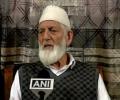
Pakistan High Commissioner Abdul Basit on Monday met Kashmir separatist leader Syed Ali Shah Geelani and briefed him about the issues discussed between India and Pakistan during Foreign Secretary S Jaishankar's visit to Islamabad.
Pakistan on Monday strongly condemned Indian Home Minister P Chidambaram''s comments that Islamabad was playing a role in instigating the Kashmiri population to commit acts of violence. Describing the statement as highly irresponsible and indicative of New Delhi not being serious about solving the Kashmir issue, Pakistan Foreign Office spokesman Abdul Basit said instead of passing such statements, India should focus on halting and human rights abuse taking place in J&K.

Violating the ceasefire again, Pakistani troops targeted several Indian positions in the Naushera sector of Rajouri district of Jammu and Kashmir.
Pakistan on Tuesday called on India to 'review the practice' of describing Jammu and Kashmir as its 'integral part' of its territory, even as Prime Minister Yousuf Raza Gilani flayed the alleged human rights violations in the Valley. "Indians should quit the policy of finding a solution to the Kashmir issue under their constitution and they should review the practice of calling (Jammu and) Kashmir an integral part of India," Foreign Office spokesman Abdul Basit said.
India and Pakistan agreed last year on a number of steps aimed at increasing bilateral trade.

Geelani was handed the invitation letter from Sharif by Pakistan high commissioner in India Abdul Basit over a dinner at the latter's residence at Tilak Marg in Delhi.
Pakistan has neither admitted that four of the nine terrorists who carried out the Mumbai terror attacks were its nationals nor has asked India for their bodies, Pakistan foreign office has said.

'Pakistan is keen on a peaceful process. We would like to have a sustained and comprehensive dialogue process.' 'At one point Pakistan wanted no dialogues with India without the resolution of the Jammu and Kashmir issue. That didn't work then nor will it work in the future.' Pakistan High Commissioner Abdul Basit tells Bikash Mohapatra/Rediff.com what Islamabad expects from the new government in New Delhi.
Pakistan on Friday rejected India's charge that Inter Services Intelligence was involved in the Mumbai terror attacks, alleging that it was a "manifestation of undisguised hostility" and "smear campaign" against Islamabad.
Pakistan on Thursday accused India of conducting the probe into the 2007 Samjhauta Express train blast at a "snail's pace", as it asked New Delhi to share with Islamabad "at the earliest" the latest developments in the case in which 42 of its nationals were killed.
